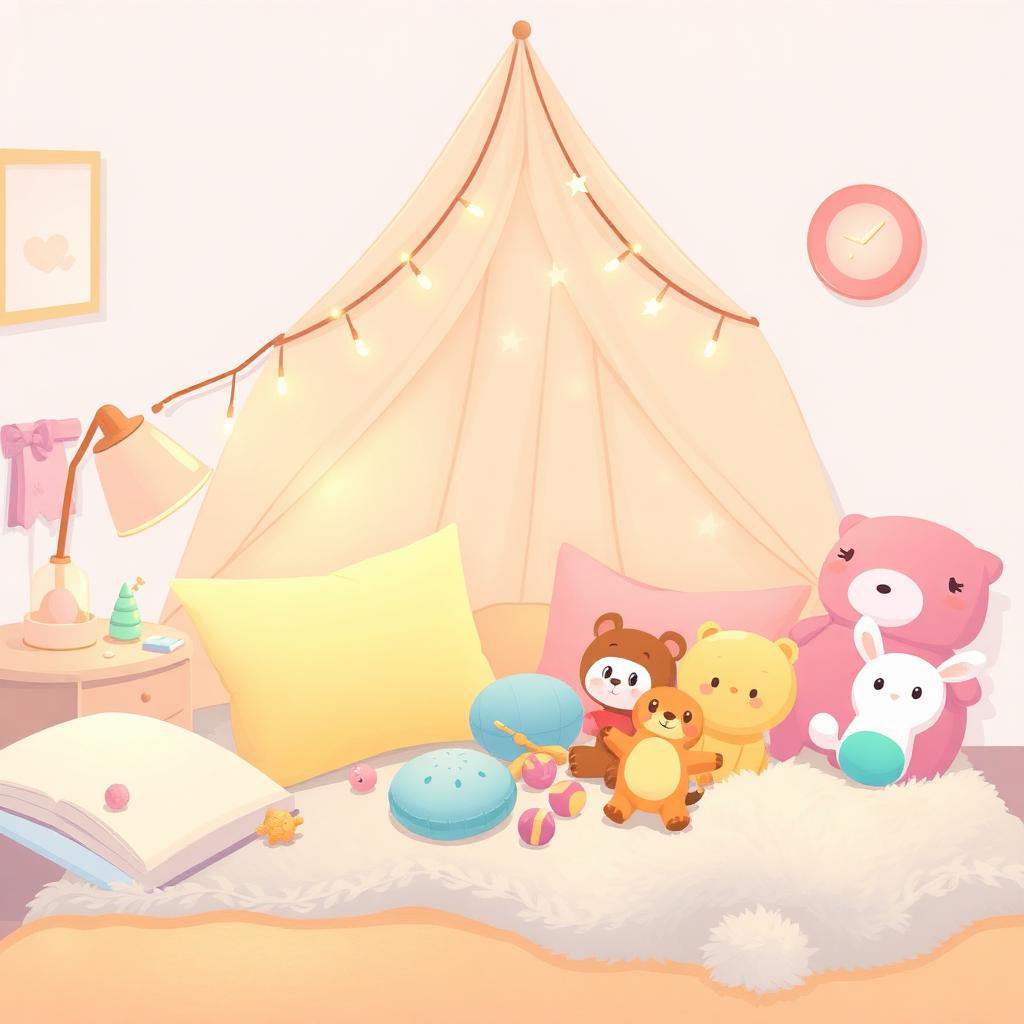
A calm corner is a small, predictable space where a child can decompress when the world feels too loud, too bright, or too fast. The magic is not the budget. The magic is the consistency: a place that always means safety.
1. Soft boundaries
Use a small tent, a canopy, or even a fitted sheet draped over two chairs. A defined edge tells the nervous system: you are tucked in, you are safe, the world is smaller here.
2. A weighted hug
A weighted lap pad or a small blanket gives the deep-pressure input many sensory-seeking kids crave. Aim for roughly 10 percent of body weight and always let the child remove it on their own.
3. A fidget basket
Stock a small bin with three or four favorites: a pop-it, a squish, a textured ball, a chewable necklace. Rotate weekly so it stays interesting without becoming overwhelming.
4. Gentle light
Overhead fluorescents are the enemy. A warm fairy-light string or a himalayan-salt lamp tells the brain the alarm bells can power down.
5. A visual reset card
A laminated card with three steps - breathe, name a color, squeeze your hands - gives kids a script when their words are gone. We have a free printable in our resources hub.
“Harbor's calm corner is the first place she goes when she walks in from school. It's not a punishment, it's a hug she can build herself.”
Be someone's safe harbor
Your support sends sensory kits, calm corners, and big hugs to kids who need them most.