Inclusion is not a curriculum. It is a thousand tiny choices made on a Tuesday afternoon. Here are the shifts our teacher partners say change everything.
Environment
- 1Offer alternative seating - wobble cushions, standing spots, a reading nook.
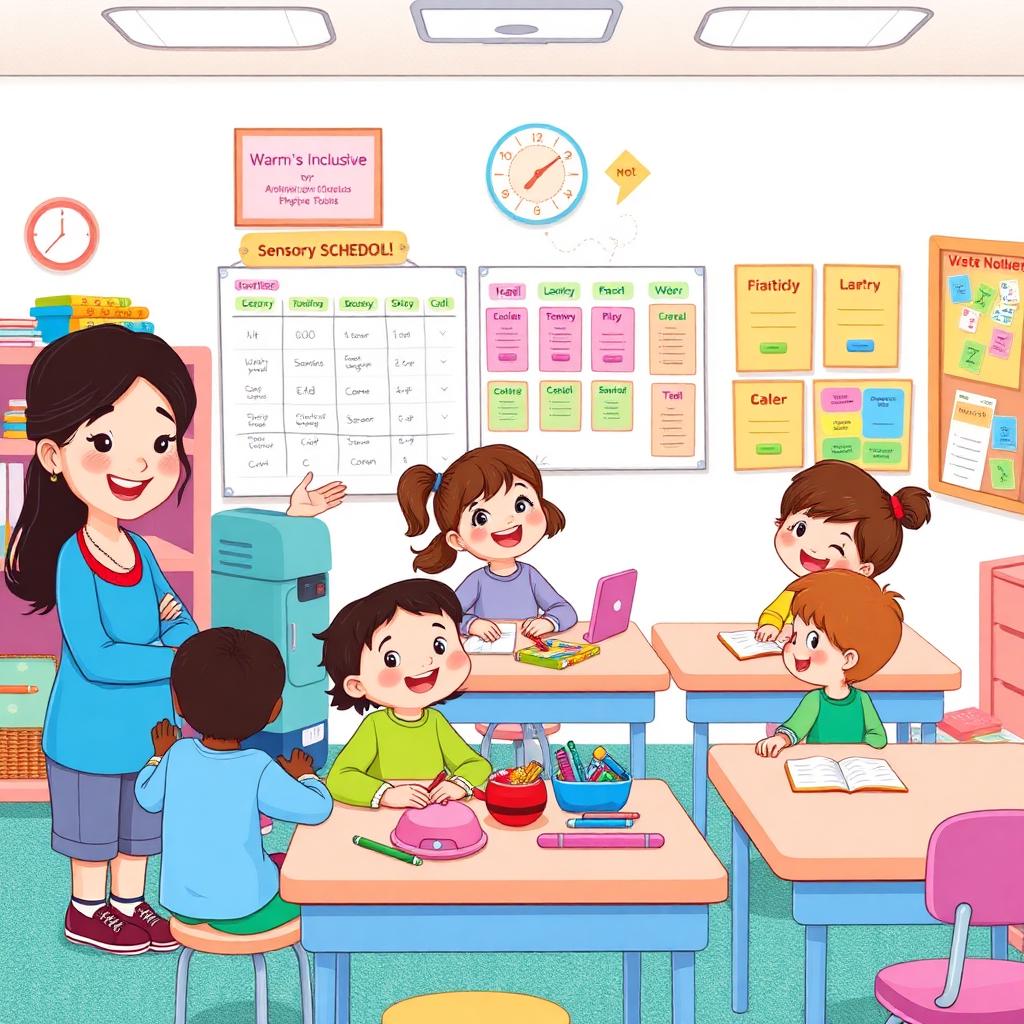
- 2Keep a 'sensory shelf' with headphones, fidgets, and a visual timer.
- 3Use a visual schedule that lives on the wall and updates with each transition.
Instruction
- 1Give directions in writing AND out loud. Repeat after thirty seconds.
- 2Offer two ways to show learning for every assignment.
- 3Build in five-minute movement breaks every forty-five minutes.
Relationship
- 1Greet every student by name at the door.
- 2Create a private signal for 'I need a break' - a card, a hand signal, a quiet pass.
- 3Notice one strength per student per week and tell them out loud.
“The student who is the hardest to love is the one who needs it the most.”
Be someone's safe harbor
Your support sends sensory kits, calm corners, and big hugs to kids who need them most.